
How Much Ink Stays in the Brush
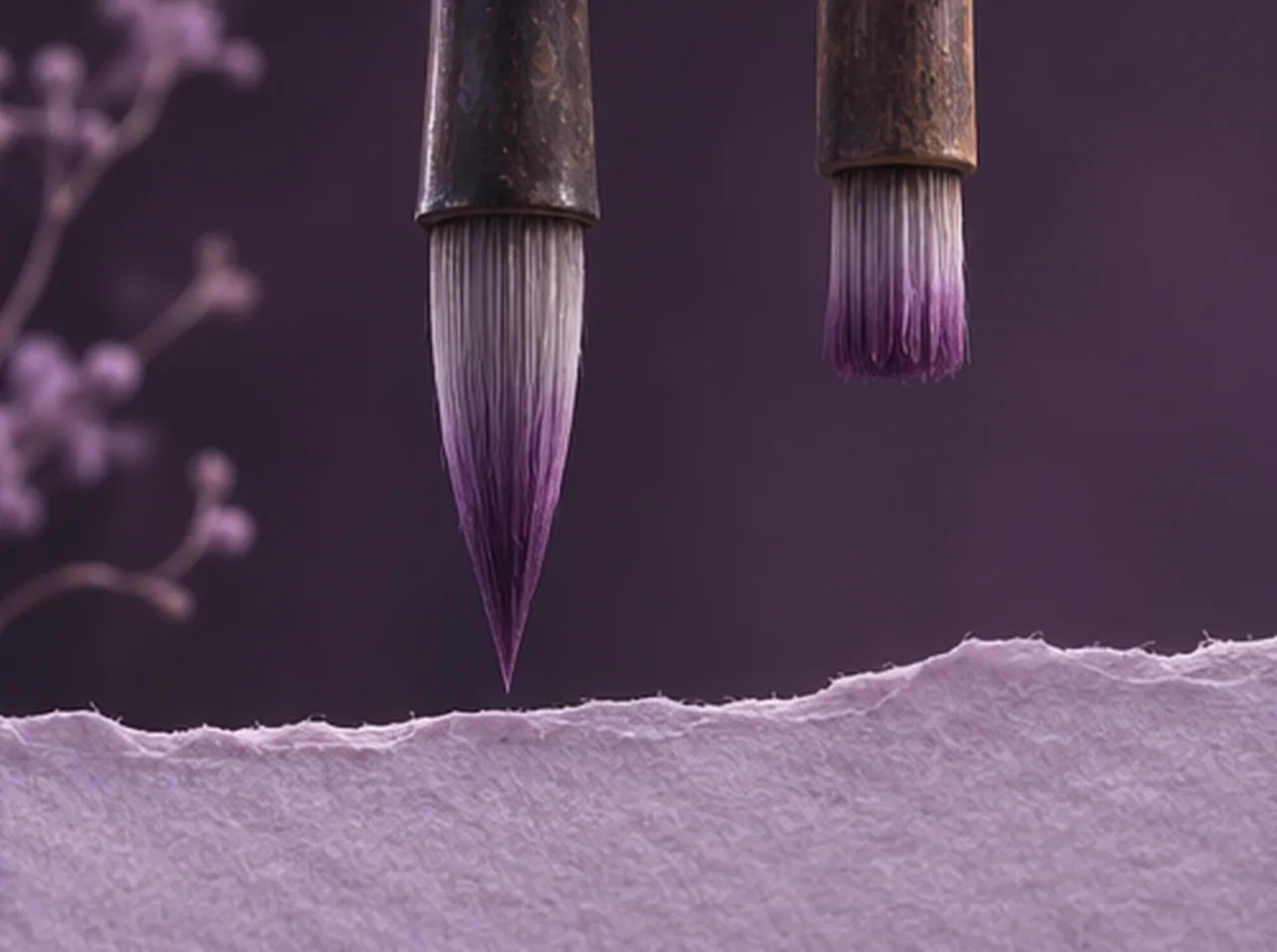
Two brush ends rest above the same practice surface. One holds a visible weight of dark ink and another has a thin wash along its sides. The earlier version of the prototype treated both brushes like a line of identical width. Their artwork suggested different properties that a player could not use. We let one long stroke lose some fullness as it moved and preserved a dry comparison patch at the place where a player could stop. The resulting study concerns how much information is available near the tip before it reaches a new part of an older mark.
Show both brushes on the same edge
At the top of the tile, let the brush tips face the same bright corner. One can hold a rounded edge while the other ends in several small fibers. Tilting toward the picture gives the darker one a small drop on the shadow side. The other leaves a wider region of visible thread before it touches the first dark line. A player can compare what both might add before asking them to make the same stroke. A Mark That Would Spread uses an area where a thicker new branch may move past the intended point if the spellcaster takes it across a soft patch.
Give the later stroke a quieter mark
The fuller brush can cover the first bend and begin to lose ink near the dry strip. If the line is thinner at the corner, its nearer edge can still be found against the dry cloth. The player can lift the brush there and look at the change in shape before moving closer to the old line. Pause before Making the Last Stroke gives a related pause where a light ridge is still settling. The trial of the brush should show the interval during which the person decides how much contact to make with the mark again. A smaller stroke can be worthwhile if they have enough room to inspect where it finishes.
Establish one comparison before moving to another material
A small ceramic tile underneath both lines stays fixed as a familiar test surface. On different material the same brush can leave a larger trace, but the first mark gives the player a stable idea what the change looked like. An Edge the Ink Cannot Cross uses dry cloth to hold a position through two views. Here the comparison plate can be set beside the fabric after the first look. It gives the player a reason to notice when a shade change belongs to the pigment and when a new surface might draw out the remaining ink.
Keep the opening for a correct final stroke
If a mark is almost closed, the player may need the lighter brush to reach its last part without filling the whole notch. Show a thin test stroke along an outside edge first. A Trace the Closed Loop scene can then give the user a place to compare the thin line with the two existing tips. The result should leave room to choose the thicker brush for another part when the context favors it. Limit the contrast to the tool and its recent trace so the fictional spell can remain recognizable as the same kind of problem.
Ask what changed at the edge of the trace
After finishing a study, give somebody the chance to compare where each line began and where it became thin enough to approach a familiar gap. If they can tell how the position of the brush and the size of the mark related, the test supplies a useful choice for a later room. If the only answer is that one tool bears a different color, give the tips and the surface a more readable relationship. The last bit of ink can make a precise difference before a spell joins its next line.