
An Edge the Ink Cannot Cross
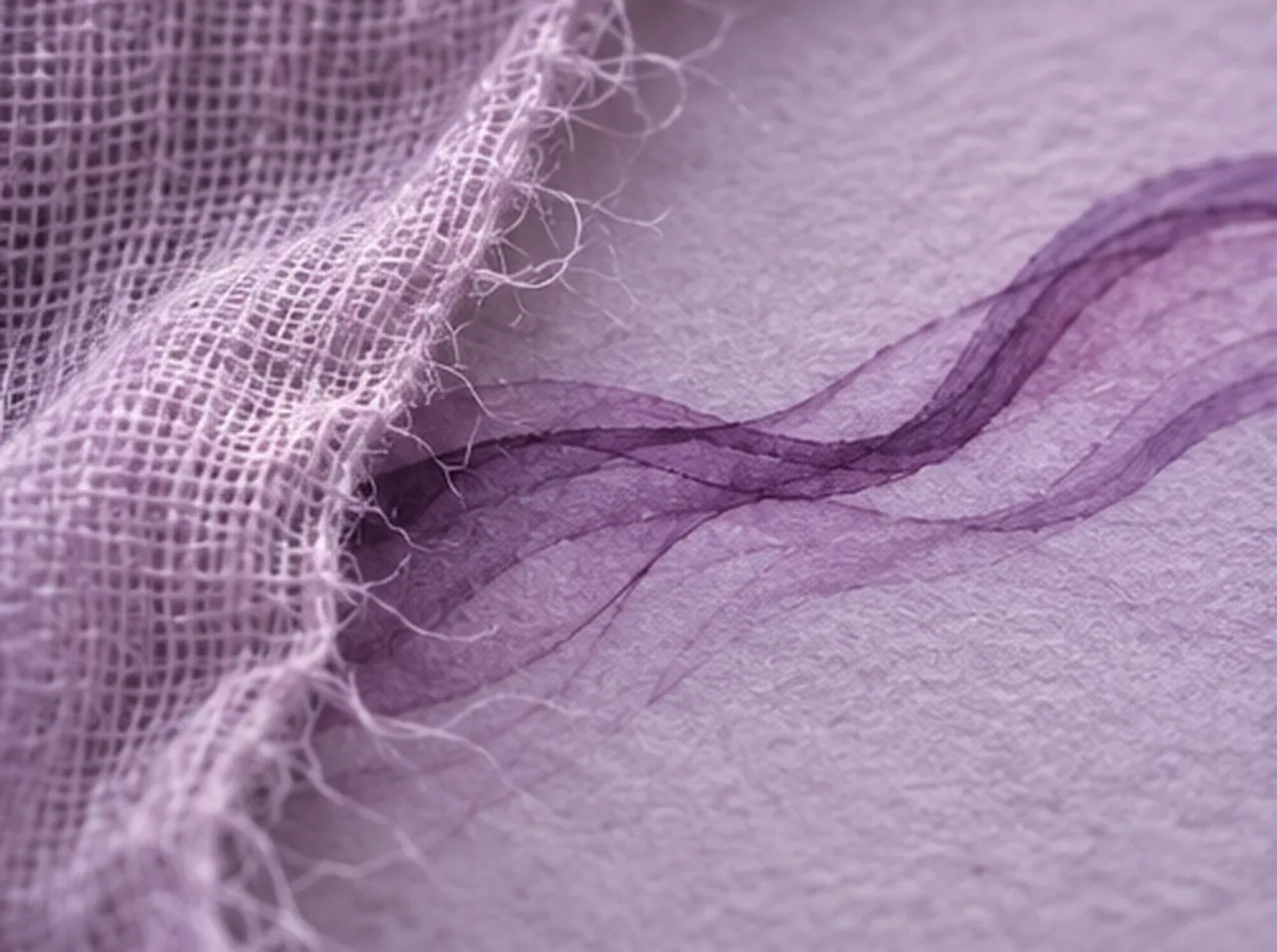
Along the right side of one practice mark, two dark fibers curve into a band of dry cloth. The original picture presented that band as a violet border around the whole tracing surface. It was clear from above and looked almost like a part of a spell when it was seen from the side. We wanted the player to inspect the limit as a surface, then find one place to pause a spreading stroke. The revised boundary shows how pieces of dry cloth can be read at the scale of the fictional ink.
Compare the older painted border first
The violet band stretches from one side of the tile to the other. When the ink approaches it, the effect says the new mark stopped, but the shape of the tile still looks smooth. A person could understand that the scene has declared a border without knowing where the dry part began in the world. This makes it difficult to trace along the edge before returning to it from a different angle. A Mark That Would Spread needs that return when the earlier direction starts pulling a branch toward the dry material. A boundary can help the player earlier, while the branch is still only a possibility.
Show the first dry fibers in the revised view
Put two small pale threads at the place where the clean material breaks away from the dark strip. A weak close light gives each enough shadow to stay distinct when the main light moves. The ink can darken around the frayed tip and stop before the open area between the threads. The stable space becomes easier to identify than a changed color on the surrounding board. In Keep a Gap in the Loop a dry notch does similar work for two endpoints that are still separated. Here the space marks where a new strand can still be kept outside the older branch.
Put a return angle beside the material
Ask the spellcaster to move around the quiet edge after tracing a little of the original. The outside fiber stays visible while some of the pigment becomes hard to see. From the return angle the line of dry material is broader. A shorter test move can approach it directly from the side. If following the edge changes the fit of the mark, the brush can be lifted and the previous point remains available. Give that view enough time for somebody to explain how they kept the two pigments from joining. The response can show a wider dry surface while leaving one unsettled mark within it.
Preserve a distinction between a gap and another layer
Some textures catch light on the peak of a fiber and make a larger area look empty. In a wide view its shadow still connects to a dark base. Read the ink against the thread so players can tell which part is dry and which part lies below the fiber. How Much Ink Stays in the Brush follows the difference between two lines that can first appear to have the same thickness. The exposed piece of cloth should help someone name the state of the surface before they guess where a particular pigment will go. A boundary gives the next stroke a small physical prediction.
Finish where the coast of the mark remains visible
At the end, the player can draw a little section of the original line and the part where it stopped. Ask where they would go if they wanted to inspect the boundary again while the rest of the ink was still moving. Two visible fibers can supply a position that does not change with the animation. Seeing where the dry area starts makes the world more usable than simply knowing a forbidden area has been drawn. It also gives a later review a place to watch when the first stroke starts to spread.