
A Mark That Would Spread
Return to the case rail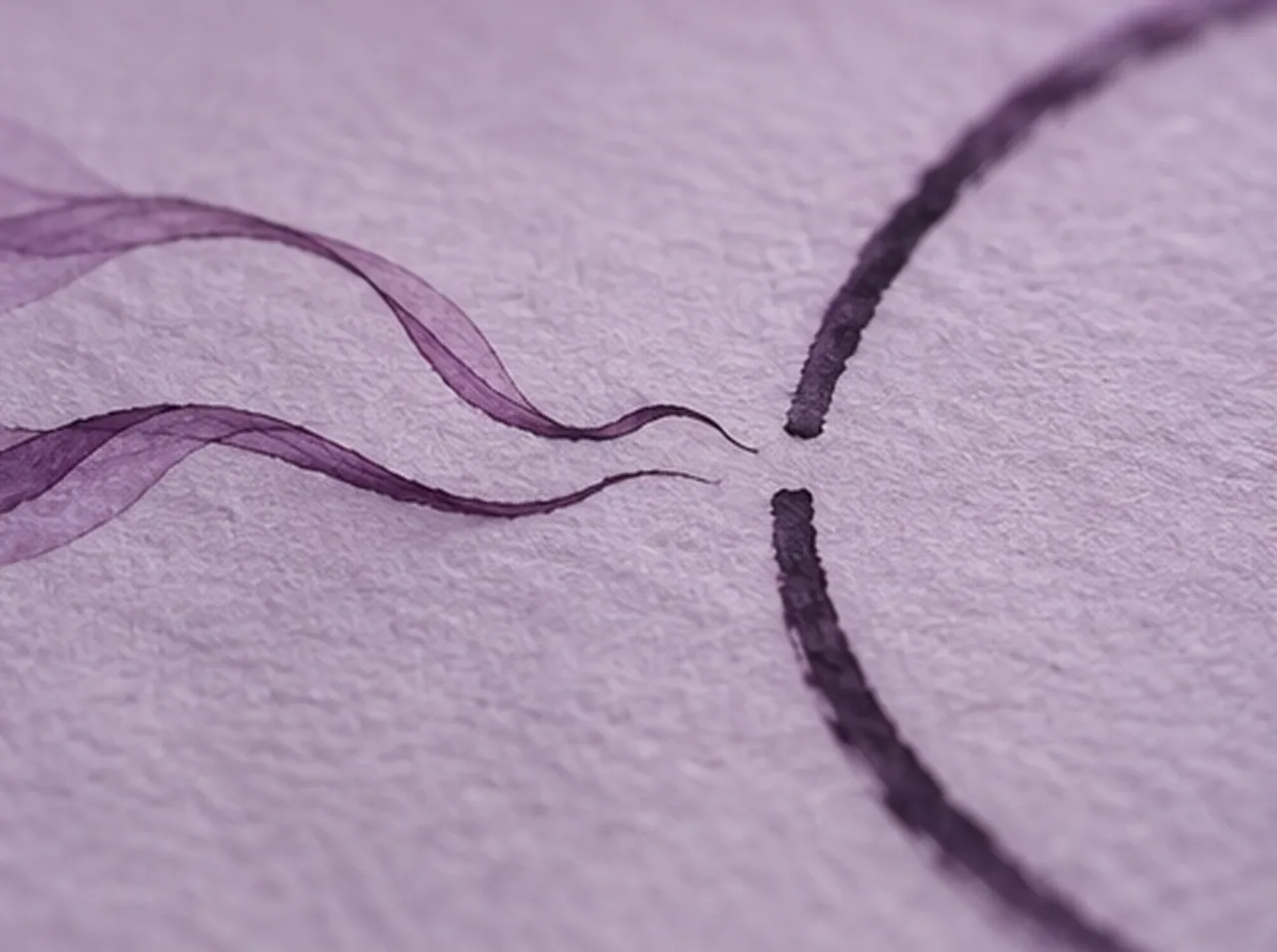
The spellcaster already has a mark on their wrist. Near one tip the fictional ink forms a shallow branch that can move beyond the original pigment. A dry margin beside it offers an ordinary place to stop. A Mark That Would Spread is a concept about choosing where to take a living stroke when some of its motion can continue after contact. The player reads the surface, traces part of the intended route, and leaves near the point where a useful branch could otherwise become a curse.
Learn where the old mark stops
The opening model shows a longer stroke and a faint curve at its end. One side touches dry cloth laid against the wrist. The cloth keeps a light edge that can be seen in both the dark and a higher view. The player can look at the outline of the longer stroke before following it with a slow gesture. When the mark begins to bend, the dry edge helps the player decide which part belongs to the original. An Edge the Ink Cannot Cross describes a small test of making a boundary identifiable from several positions rather than by one color change.
Use a short trace to get a readable response
Follow the direction of the old strand far enough for a line to move beside it. The new branch starts to reach toward a patch of unused pigment. A player who pauses can see their move taper toward the edge without producing a complete new curl. Give that taper a form the player can compare with the old line. Pause before Making the Last Stroke examines how the time after leaving the brush became a part of the decision. The next stroke should follow after the current one can be read, even if the mark looks ready to move faster.
Leave a second route that does not touch the unfinished branch
An alternate line begins at the thicker part of the original. The spellcaster can press there and trace along the dry limit to redirect the moving edge. The unfinished pigment can remain visible underneath so a return has a reason. Ask how far the new angle carries power and whether there is still a safe stop before meeting the branch. The player can try moving the line a shorter distance when the first gesture extended too far. This gives them a chance to learn the limits of the old mark without being forced to erase it.
Put the movement in material rather than glare
The art direction uses dark plum pigment on a pale surface. Large ink areas absorb light. A narrow ridge on one tip can show how far it might continue in a quieter view. Dry fabric and wet ink remain distinct in outline and texture where they meet. Reflected light should belong to the nearest dark part without making the whole mark bright. Movement is most useful near the place a player decides whether to stop.
Prototype one spread with a useful pause
The concept is in development. An early prototype can hold one branching mark, one resting edge and an alternative gesture in the same close view. Watch whether someone can stop the trace, describe what continued afterward, and return to the old line from a clearly readable place. The larger spell story can begin once those three actions belong to the material the player is tracing.