
Keep a Gap in the Loop
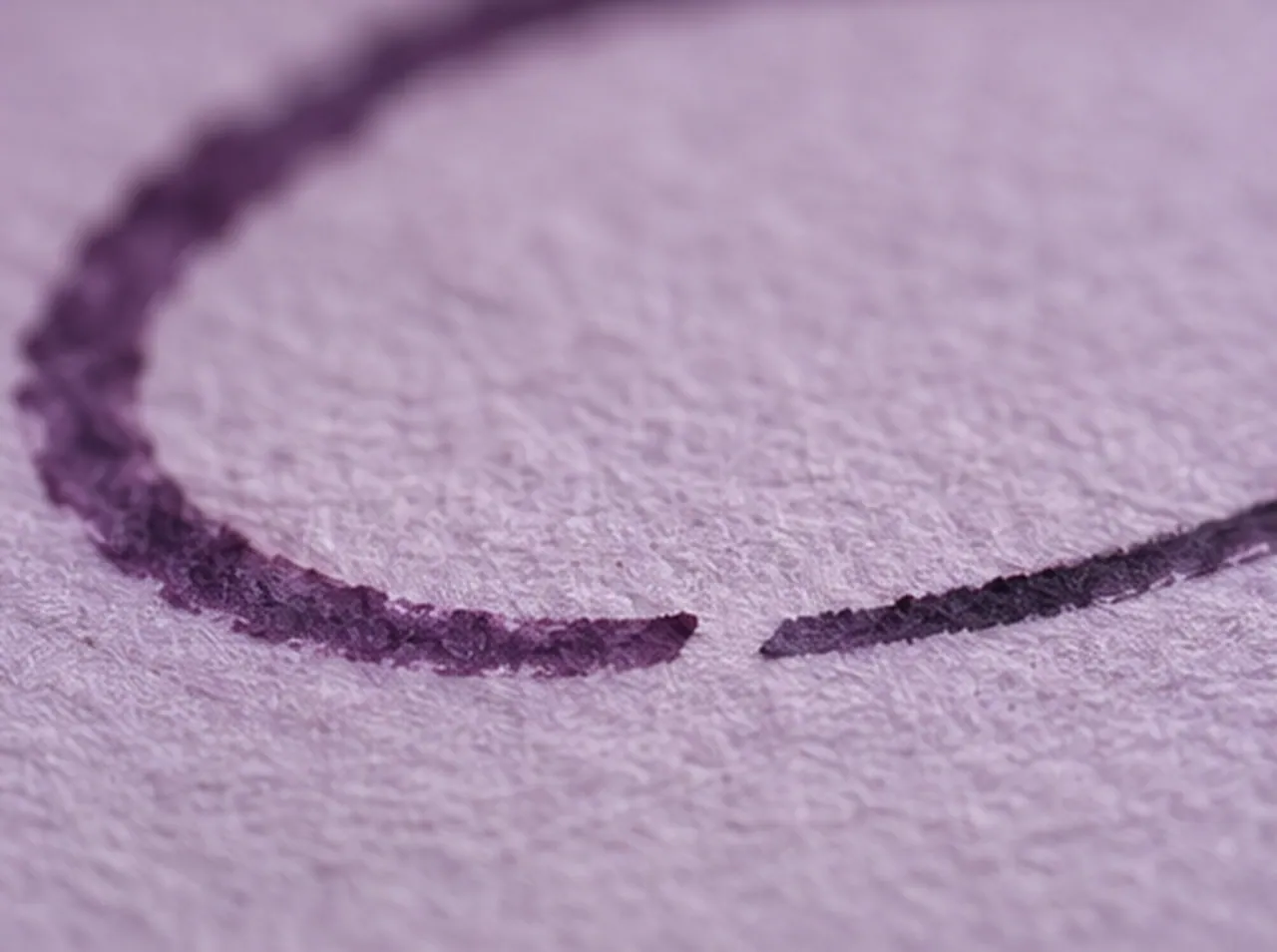
An almost finished loop has two tips close enough to seem joined when their shadows overlap. An early drawing left the mark open by fading the last part of its line. A player could see the fade and still read the darker space under it as a continuous ring. We made a revised drawing with a small dry notch. The notch holds its position between the tips when the ink begins to settle. This study compares what those two pictures allow somebody to check before making the final stroke.
Look from the point where the first stroke began
The thicker tip lies just short of an unpainted corner. It is easy to follow the rest of the loop from there. At the far end, the thinner tip seems to almost cover the place with the corner. Give somebody enough light to see the dry material underneath both. Trace the Closed Loop uses the corner in a longer turn, where the player has to identify the original line after following a changing one. If the two ends meet in their shadows but remain separate on the surface, there should be a way to see that from the first position.
Draw a gap with a stable shape
The first fade occurred on a greasy strip that changed the look of the entire curve. We replaced it in the model with a beveled dry notch. Its upper side almost continues the old curve. Its bottom side makes a short change in angle. A player from the opposite direction can point to where the surface begins to turn even if the narrower tip lands in shade. There is a point to remember before moving closer to the end of the second stroke. An Edge the Ink Cannot Cross examines a similar point where a piece of dry material marks the end of a possible movement.
Let the stroke rest without filling all the space
After tracing toward the gap, the end moves a little farther along the dry edge. Stop with the tip still in view and see whether the older stroke changes where its shadow touches the opening. Pause before Making the Last Stroke follows how such a rest can become part of the action. If the two tips clearly remain on opposite sides of the notch after settling, a player can decide which will make the better starting direction for the return. A useful gap also leaves room to approach it from the side where the earlier stroke has the heavier shape.
Keep an earlier reading when the first join misses
A player may start the join too near the edge of the notch. The earlier stroke can leave a little rim in view beside the connection. Let the ink settle without losing the original drawing entirely. There is a way to choose a narrower part of the opening on a second attempt because the same stable edge remains visible. The new motion becomes a result the player can examine rather than a message they must dismiss. If the old gap disappears under a blob in every view, there is too little information to make the attempt meaningful.
Try a comparison without naming either picture
Show both versions to somebody before announcing what changed. Ask where they might pause on their way to the starting point and where they expect to see the barrier again from the far side. A useful gap gives them a place that can be followed using the curves and shade already in view. It does not require the player to inspect every inch of the line before continuing. When the notch is easy to hold in mind, the later part of the loop can remain alive and uncertain without making its opening confusingly disappear.